Your early moves worked. Learn systems, write better code, deliver more, grow predictably.
Then something shifts. The problems become less defined. The answers less obvious. Effort increases — but impact doesn't.
I work with senior engineers and leaders at that inflection point. Where experience alone doesn't answer the question.
I joined Amazon in 2014 as an IC Technical Program Manager. Over 11 years I moved into engineering management — from L5 to L7, managing managers managing engineers. I left having led an 80-person organization, conducted 1,500+ interviews, and mentored and graduated 10 Amazon Bar Raisers. The Bar Raiser programme is an invitation-only certification — Amazon's mechanism for maintaining hiring standards across the company. As a Bar Raiser Mentor, I didn't just uphold the bar; I trained the people responsible for holding it.
Then DigitalOcean — Senior Director, building the India engineering hub from zero to 60+ across 7 product lines in 8 months. I redesigned their interview process end-to-end. 85% offer closure rate against an industry average of 30-50%.
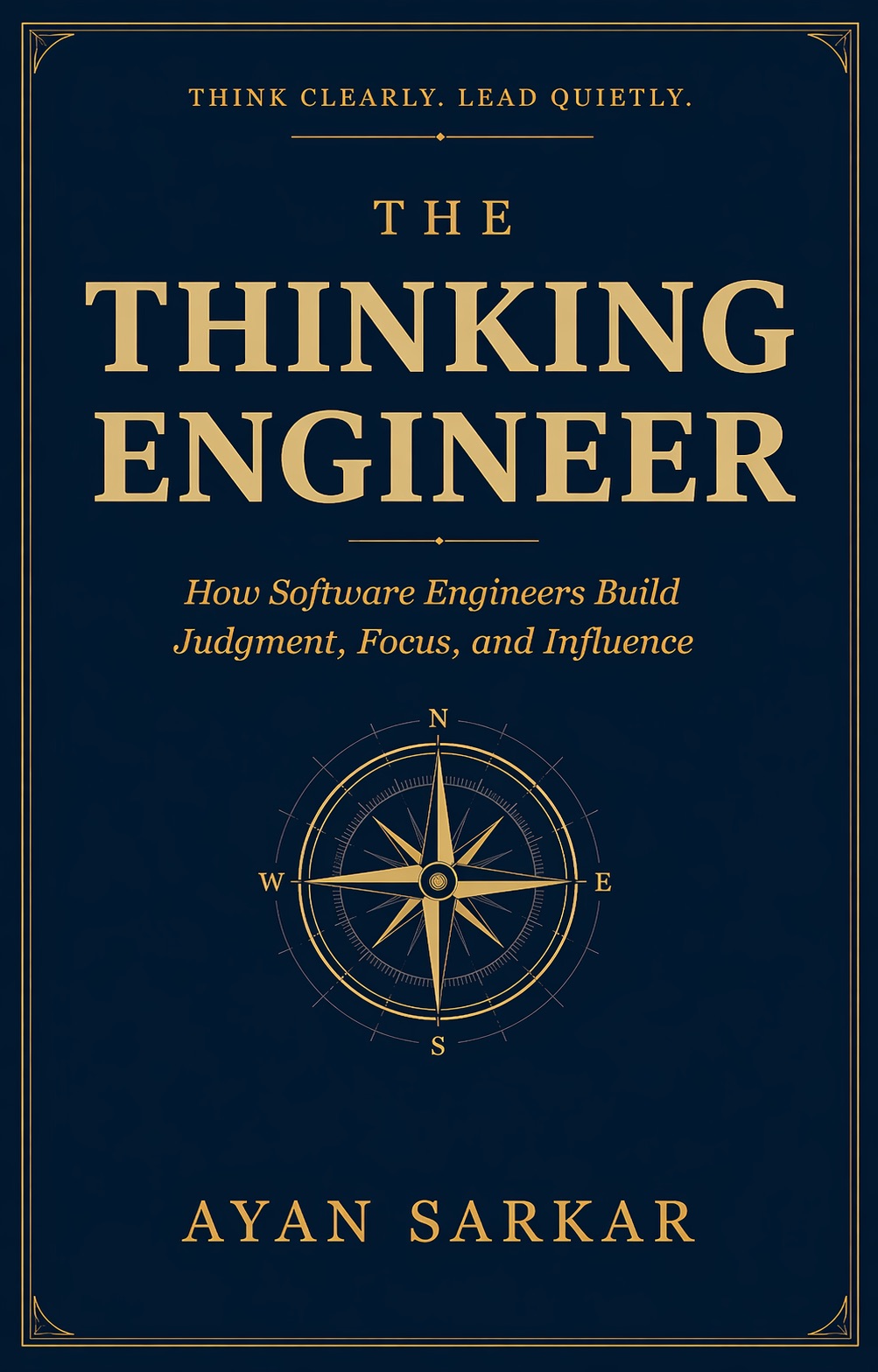
In February 2026 I left to build this practice and write. The book — The Thinking Engineer — came from frameworks I'd been developing and teaching inside Amazon for years.
I'm based in Hyderabad. I write. I read more than I should. I work with senior engineers and leaders because it's the work I'm genuinely energized by — not building org charts, but the conversation where someone finally sees their situation clearly.
Senior engineers and leaders facing the decision that defines their next chapter. When the safe answer isn't enough and you need to think clearly about what comes next.
Real conversation about your actual situation. No pitch. I'll tell you honestly whether I can help.
Most engineering books focus on tools and technologies. This one focuses on what actually determines who grows and who plateaus.
The skills that get engineers to Senior stop working at Staff, Principal, and leadership levels. The gap isn't technical. It's how engineers think — systems thinking, judgment under ambiguity, compounding experience, making your thinking visible enough to influence decisions.
The frameworks in this book were developed and stress-tested across 22 years of doing the work — not constructed from theory. They're what I use in all of this advisory work.
For senior engineers who feel their growth has slowed despite strong performance. For anyone approaching Staff, Principal, or leadership who senses that working harder is no longer the answer.
"The engineers who navigate this gap aren't smarter or working harder. They think differently. They ask better questions. They see systems instead of components."